



Abstract
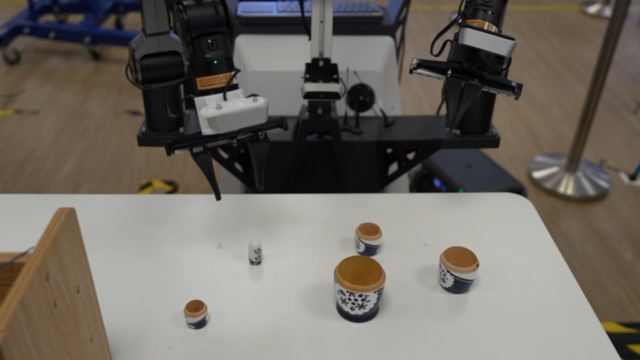
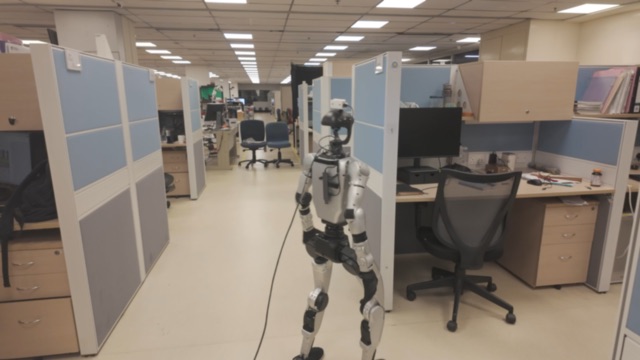
A foundation model should not act in isolation as an embodied agent. Yet, existing methods often optimize individual components of the agent stack, such as memory, context, skills, or action interfaces, rather than treating the supporting system itself as a unified policy. Moreover, interaction alone does not yield self-improvement unless execution experience is converted into persistent, validated system changes. We therefore propose RoboFoundry, the first embodied agentic framework that formulates this process as Self-Evolving System-as-Policy. RoboFoundry diagnoses capability gaps in decision-making and memory management, converts execution traces into validated task-specific system updates, and promotes recurring improvements to the general system. Evolution operates over two complementary surfaces: a context system that manages active internal context and persistent file-system memory, and a hierarchical skill system that organizes atomic skills, reusable compositions, and failure-conditioned recovery. A shared semantic interface separates embodiment-invariant decisions from embodiment-specific execution, allowing evolved system capabilities to transfer across heterogeneous robots. On EmbodiedBench, RoboFoundry achieves state-of-the-art performance, notably improving GPT-5.5 by 27.8%. It also brings Qwen3.7-Plus to near parity with GPT-5.5 (70.3% vs. 72.7%), showing consistent gains from system-as-policy evolution across foundation models. For long-horizon memory, RoboFoundry outperforms all baselines on RoboMemArena by at least 39.0%, even against methods assisted by external foundation models. On LIBERO-PRO, it further outperforms Cap-Agent0 by 243.8–679.7% across all perturbation types. In real-world deployments, RoboFoundry demonstrates zero-shot transfer and online evolution across robots and tasks, highlighting its potential for fully autonomous embodied agents.

Stronger systems, more capable agents: Explore RoboFoundry across foundation models and EmbodiedBench’s four embodied task suites.
View all results · Success rate (%)
| Method | Avg. | EB-ALFRED | EB-Habitat | EB-Navigation | EB-Manipulation |
|---|---|---|---|---|---|
| RoboFoundry (GPT-6 Astra) | 78.0+6.1 | 90.0+2.7 | 86.7+11.4 | 80.2+3.2 | 54.9+6.9 |
| RoboFoundry (GPT-5.5) | 72.7+15.8 | 84.0+7.3 | 88.7+24.7 | 72.0+17.3 | 45.9+13.8 |
| RoboFoundry (Qwen3.7-Plus) | 70.3+10.4 | 81.3+8.0 | 80.3+15.3 | 71.9+7.6 | 47.7+10.5 |
| RoboFoundry (GLM5.3-Flash) | 69.3+7.4 | 80.0+8.3 | 75.0+14.3 | 72.7+1.7 | 49.5+5.1 |
| RoboFoundry (Qwen3.8-27B) | 66.5+14.2 | 78.0+12.3 | 77.0+19.0 | 68.3+16.0 | 42.8+9.5 |
| GPT-6 Astra | 71.9 | 87.3 | 75.3 | 77.0 | 48.0 |
| GLM5.3-Flash | 62.0 | 71.7 | 60.7 | 71.0 | 44.4 |
| Qwen3.7-Plus | 60.0 | 73.3 | 65.0 | 64.3 | 37.2 |
| GPT-5.5 | 56.9 | 76.7 | 64.0 | 54.7 | 32.1 |
| Qwen3.8-27B | 52.3 | 65.7 | 58.0 | 52.3 | 33.3 |
| Claude-3.5-Sonnet | 50.5 | 64.0 | 68.0 | 44.7 | 25.4 |
| GPT-4o | 50.4 | 56.3 | 59.0 | 57.7 | 28.5 |
| Claude-3.7-Sonnet | 49.9 | 67.7 | 58.7 | 45.0 | 28.3 |
Better long-term memory : Explore RoboFoundry leading performance across RoboMemArena’s four task categories.
View all results · TSR / CSR (%)
| Method | Overall | Transfer | Occlusion | Counting | Sequence |
|---|---|---|---|---|---|
| RoboFoundry | 53.5 / 72.8 | 70.5 / 78.1 | 38.3 / 57.6 | 55.2 / 82.5 | 75.2 / 92.1 |
| PrediMem | 38.5 / 55.2 | 22.5 / 45.2 | 27.3 / 38.4 | 45.7 / 69.3 | 72.5 / 89.5 |
| MemER | 27.3 / 49.1 | 20.0 / 36.1 | 16.4 / 33.2 | 27.1 / 65.1 | 65.0 / 79.1 |
| HiF-VLA | 16.9 / 39.8 | 17.5 / 38.9 | 12.7 / 27.1 | 8.6 / 45.9 | 42.5 / 70.2 |
| π0.5 | 21.5 / 38.7 | 20.0 / 42.8 | 12.7 / 17.2 | 14.3 / 50.9 | 60.0 / 71.6 |
| MemoryVLA | 15.0 / 35.3 | 15.0 / 37.2 | 7.3 / 13.1 | 14.3 / 55.1 | 37.5 / 65.2 |
Adapting to perturbations: Explore how RoboFoundry improves position and task success rates under object, goal, and spatial perturbations on LIBERO-PRO.
† Uses privileged simulator object poses; striped bars distinguish this reference.
View all results · Position / task success (%)
| Method | Object | Goal | Spatial |
|---|---|---|---|
| OpenVLA | 0.0 / 0.0 | 0.0 / 0.0 | 0.0 / 0.0 |
| π0 | 0.0 / 0.0 | 0.0 / 0.0 | 0.0 / 0.0 |
| π0.5 | 17.0 / 1.0 | 38.0 / 0.0 | 20.0 / 1.0 |
| CaP-Agent0 | 21.8 / 18.2 | 25.6 / 16.8 | 11.8 / 14.0 |
| ASPIRE | 98.0 / 95.0 | 81.0 / 45.0 | 51.0 / 60.0 |
| Harness VLA (Codex) | 81.0 / 69.0 | 94.0 / 91.0 | 75.0 / 66.0 |
| Harness VLA (CC) | 94.0 / 80.0 | 88.0 / 90.0 | 87.0 / 87.5 |
| RoboFoundry | 96.0 / 98.0 | 88.0 / 86.0 | 92.0 / 91.5 |
| RoboFoundry† | 99.0 / 100.0 | 96.0 / 100.0 | 98.0 / 99.2 |
Better memory across agent configurations: Explore how RoboFoundry improves long-term memory in standalone π0.5 and PrediMem through context evolution.
View all results · TSR / CSR (%)
| Memory category | π0.5 | PrediMem | ||
|---|---|---|---|---|
| Base | +RoboFoundry | Base | +RoboFoundry | |
| Transferring | 20.0 / 42.8 | 62.5 / 71.2 | 22.5 / 45.2 | 67.5 / 76.2 |
| Occlusion | 12.7 / 17.2 | 33.6 / 47.2 | 27.3 / 38.4 | 36.4 / 56.4 |
| Counting | 14.3 / 50.9 | 58.8 / 79.6 | 45.7 / 69.3 | 53.7 / 80.3 |
| Sequence | 60.0 / 71.6 | 70.0 / 90.8 | 72.5 / 89.5 | 73.0 / 90.5 |
| Avg. | 26.8 / 45.6 | 56.2 / 72.2 | 42.0 / 60.6 | 57.7 / 75.9 |
Task-specific commits, general-system improvements: Follow RoboFoundry as it validates task-specific updates and promotes them to the general system, raising held-in success from 21.4% to 78.0% on the EB-Habitat spatial subset.
- 1 · Evaluate candidate
- 2 · Held-out check
- 3 · Commit / discard
Held-out checks · select an evaluation to inspect it
View the full evolution trace
| Evaluation | Candidate (%) | Retained (%) | Held-out check | Decision |
|---|---|---|---|---|
| 0 | 21.4 | 21.4 | Skipped | Initial system |
| 1 | 35.7 | 35.7 | Pass | Commit |
| 2 | 42.9 | 42.9 | Pass | Commit |
| 3 | 50.0 | 50.0 | Pass | Commit |
| 4 | 42.9 | 50.0 | Fail | Discard |
| 5 | 42.9 | 50.0 | Skipped | Discard |
| 6 | 78.0 | 78.0 | Pass | Tag & promote |
See the system in action: Explore RoboFoundry across different real-world experiments. Videos are shown at 2× speed.
BibTeX
@misc{liang2026robofoundry,
  title={RoboFoundry: System-as-Policy Evolution for Self-Learning Embodied Agents},
  author={Jingsong Liang and Shuhao Liao and Shizhe Zhang and Diyuan Hou and Yuxin Cai and Xinjian Deng and Chengyang He and Wenhui Huang and Runjia Tan and Zhidong Wang and Lan Yu and Xuesong Tian and Guillaume Sartoretti and Jie Luo and Yao Mu and Wenjun Wu and Wanhua Li and Chen Lv},
  year={2026},
  eprint={2609.32862},
  archivePrefix={arXiv},
  primaryClass={cs.RO},
  url={https://arxiv.org/abs/2609.32862}
}